
Marriage and Divorce Records in DeSoto County
Both record types run through one branch of the local court system. The DeSoto County Chancery Clerk issues marriage licenses and keeps them after they are recorded. Chancery Court hears divorce cases and signs the final judgment. Neither task belongs to the Circuit Clerk, which handles felony and general civil files. This split surprises many people, so it pays to start at the right office. Marriage and divorce matters are equity matters, and equity in Mississippi belongs to Chancery Court.
The DeSoto County Chancery Clerk office sits at the courthouse in Hernando, the county seat. Couples apply for a DeSoto County marriage license in person at the counter. Divorcing spouses file pleadings with the same clerk, and a chancellor decides the case. The DeSoto County Chancery Clerk also records land documents and keeps board minutes, so marriage files share space with deeds and estate papers. That shared role shapes how records are stored and searched.
Rules for licenses can shift, and local steps matter. The county publishes its current requirements online and treats that page as the controlling source.
The marriage license page lists the county's exact requirements, including cost and accepted identification, on the official DeSoto County marriage license page.
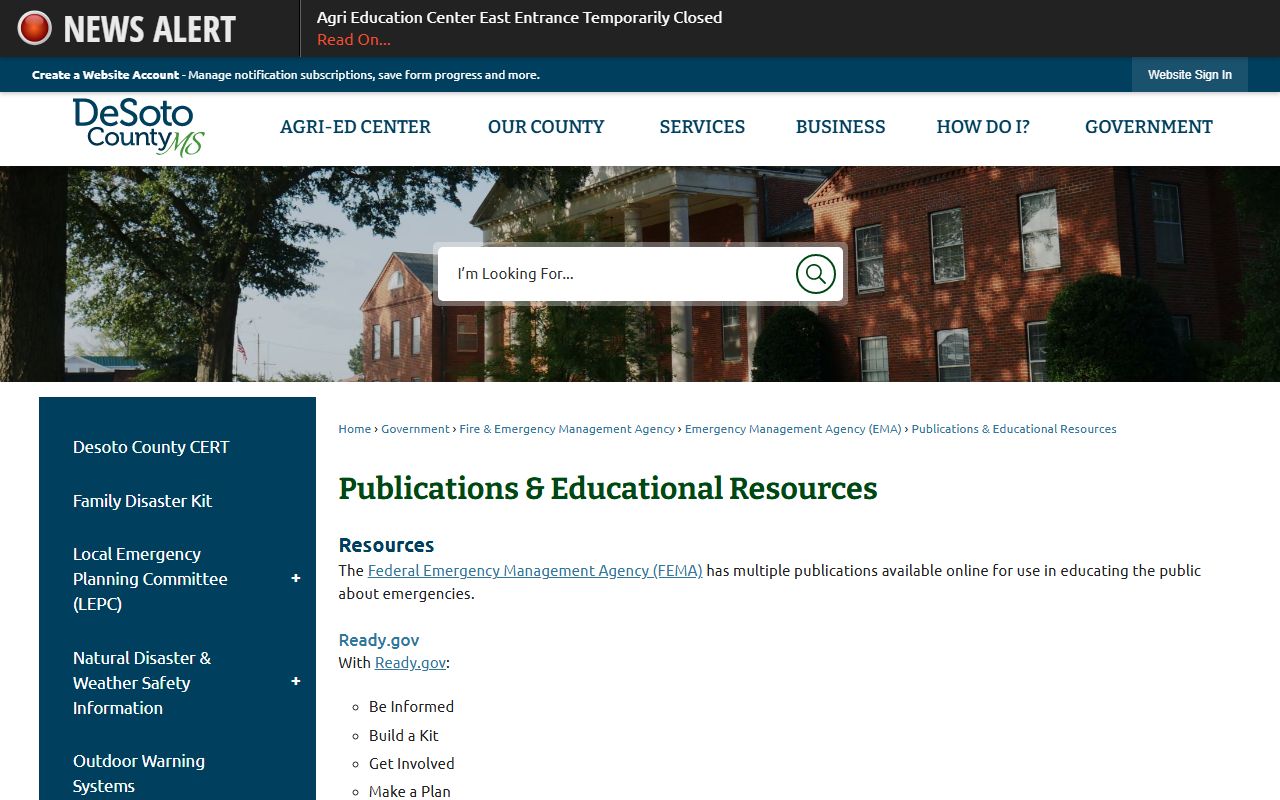
That page is the place to confirm age rules, fees, and whether both applicants must appear before heading to Hernando.
How to Apply for a Marriage License
The process is short when both people come prepared. Both applicants normally appear together at the Chancery Clerk counter. Each person brings a valid government photo ID and is ready to give a legal name, address, date of birth, and prior marriage details. The clerk verifies age and identity, takes the fee, and issues the license on the spot in most cases.
- Check the eligibility rules and the list of accepted identification on the DeSoto County marriage license page before going in.
- Both applicants go to the Chancery Clerk counter in Hernando with proof of age and identity.
- Give legal names, addresses, dates of birth, Social Security numbers if the form asks, and prior marriage facts if either party was married before.
- Pay the published license fee to the Chancery Clerk using an accepted method.
- Receive the license, then follow Mississippi rules for the ceremony and a qualified officiant.
- The officiant returns the signed license for recording, and certified copies can be requested afterward.
DeSoto County Marriage License Fields
Each applicant supplies a set of facts the clerk records on the license. The table below mirrors the application field inventory used at the counter. Exact accepted IDs and the current fee come straight from the county page, since both can change without notice.
| Field / Requirement | Required | Notes |
|---|---|---|
| Applicant 1 legal name | Yes | Matched to a government-issued photo ID. |
| Applicant 2 legal name | Yes | Matched to a government-issued photo ID. |
| Date of birth and age | Yes | Used to confirm Mississippi age requirements. |
| Identification | Yes | Government-issued ID expected; accepted forms listed on the county page. |
| Address | Yes | Current residence for each applicant. |
| Prior marriage information | Conditional | Required when an applicant is divorced or widowed. |
| Fee payment | Yes | Amount set and published by the Chancery Clerk. |
| Both parties present | Procedural | Both applicants are generally expected to appear together. |
Note: The county marriage license page is the controlling source for accepted identification and age rules, so verify those details before applying.
DeSoto County Marriage and Divorce Fees
DeSoto County costs fall into two groups. One covers the marriage license and its copies, set by the Chancery Clerk. The other covers filing a divorce and obtaining certified decree copies, also handled through the Chancery Clerk and Chancery Court. The county does not publish every figure in a single place, so the amounts are confirmed at the source rather than guessed. The table lists the fee types and where each is set.
| Item | Amount |
|---|---|
| Marriage license | Set by Chancery Clerk; see the official marriage license page |
| Certified marriage license copy | Set by Chancery Clerk; confirm at the counter |
| Divorce case filing | Set by Chancery Clerk; fee waiver possible if eligible |
| Certified divorce decree copy | Set by Chancery Clerk; per-document certification charge |
Current amounts and any fee schedule documents appear through the DeSoto County Document Center and the marriage license page. Bring an accepted payment method, since the counter may not take every card or check.
Searching DeSoto County Marriage Records
A recorded DeSoto County marriage license becomes a public record held by the Chancery Clerk. The most direct route is the clerk's counter in Hernando, where staff can locate the license by the names of the two parties and the year. A written request works too. Include both legal names, the approximate date, and a note that a certified copy is needed.
Recorded instruments tied to the Chancery Clerk can also surface through the vendor portal the county uses. The Delta Computer Systems DeSoto County portal indexes recorded documents and land records by name. Chancery case dockets may appear in Mississippi Electronic Courts where the court takes part and the user holds a public access account. For court files, Mississippi Electronic Courts is the statewide system to check.
Older marriage records and genealogy requests follow the same path. The Chancery Clerk holds historic marriage books, and staff can pull them for a copy when names and an approximate year are supplied.
DeSoto County Divorce Records in Chancery Court
A DeSoto County divorce is a Chancery Court matter from start to finish. The case opens with a complaint and runs through service, temporary orders, and a final decree. A complete file can hold a wide range of papers, and much of it is open to the public once entered. The judgment of divorce is the document most people request, since it proves the marriage ended and states the terms.
- Complaint, summons, and the answer from the other spouse
- Temporary orders covering support, custody, or use of the home
- Custody and child support filings and any parenting plan
- Financial disclosures and property settlement agreement
- Judgment of divorce signed by the chancellor
- Later modification or contempt filings that reopen issues
State pages explain the broad jurisdiction these courts carry. The Mississippi Judiciary describes that authority over domestic and equity cases on its Chancery Court jurisdiction page.
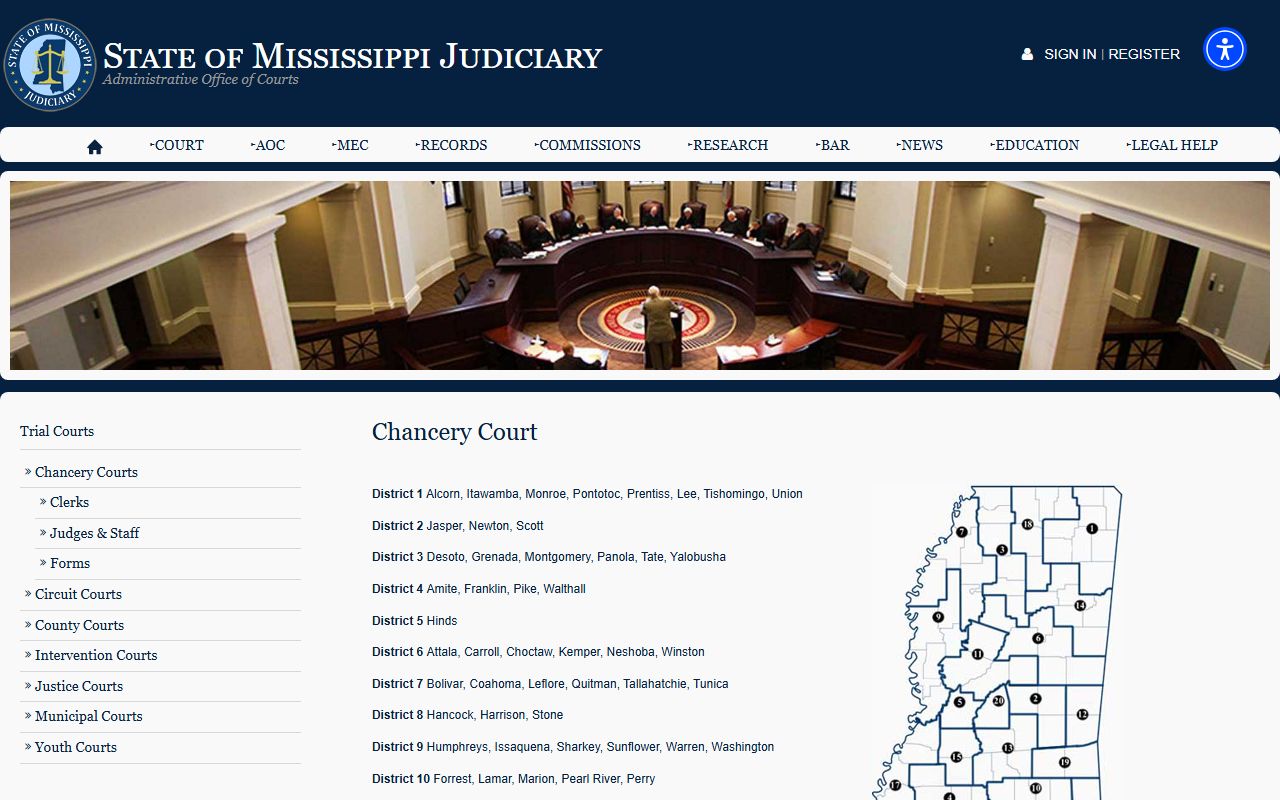
That overview confirms why DeSoto County divorce, custody, and support cases land in Chancery Court rather than Circuit Court.
Filing for Divorce in DeSoto County
A divorce case follows a set order, whether the split is agreed or contested. Confirming venue first avoids a refiling later. The path below tracks the standard steps a DeSoto County case takes from the first pleading to a certified copy of the decree.
- Confirm that DeSoto County Chancery Court is the correct venue for the divorce.
- File the complaint, or joint pleadings for an agreed case, with the Chancery Clerk.
- Pay the filing fee, or request a fee waiver if eligible.
- Serve the other party, unless the couple files jointly or service is waived.
- Settle property, custody, support, and alimony by agreement or at a hearing.
- Obtain the final judgment signed by the chancellor.
- Request certified copies of the decree from the Chancery Clerk when needed.
Many filers ask the DeSoto County Chancery Clerk for guidance on local forms before the first hearing.
Restricted Family and Divorce Records
Not every page in a divorce file is open. Mississippi law and court rules shield parts of a domestic case to protect children, victims, and private finances. A chancellor can also seal exhibits for good cause. The decree itself is usually available, but the sensitive support material behind it may be withheld or redacted.
- Children's identifying details and information about minors
- Financial account numbers and other personal identifiers
- Medical records and abuse allegations entered as exhibits
- Sealed orders and exhibits closed by the court
Adoption records stand fully apart. Under Miss. Code Ann. Section 93-17-25, adoption files are confidential and are not available through an ordinary case search. Access to any sealed family record generally requires a court order or proof of legal standing. Probate and guardianship files run through the same court, and details on those sit with the DeSoto County Chancery Court records.
Note: A sealed exhibit or a redacted divorce file does not mean the judgment is hidden, only that protected support material has been removed from public copies.
Certified Copies and Vital Records
People often mix up a DeSoto County record with a statewide vital record. The two are not the same. A certified copy of a DeSoto County marriage license comes from the Chancery Clerk, the office that recorded it. A divorce decree also comes from that clerk, drawn from the Chancery Court case file. A statewide marriage or divorce verification is a separate product that a state office may issue, and it confirms an event without reproducing the full local file.
Choosing the right document matters for legal use. A certified license copy or a certified decree proves the specific record. A general vital record or a verification only confirms that an event was reported. For a name change, an estate claim, or a benefits filing, the certified county copy is usually what is required.
It also helps to know what the Chancery Clerk does not handle. This office records marriages and keeps divorce files, but it is not the source for every official document tied to county residents. Crash reports, for example, come from a separate state agency, not the courthouse.
The Mississippi Department of Public Safety provides those traffic-crash documents through its crash reports page, which is unrelated to marriage or divorce filing.

Knowing which agency holds which record keeps a request from stalling at the wrong office and points each search to the right source.