
DeSoto County Jail Roster Overview
The DeSoto County Sheriff's Department runs the county jail and posts a public list of people in custody. That list is called the DeSoto County Jail Docket. It is the first stop when you need to confirm that someone was booked into the local jail. The docket is a free, public web tool. No account or fee is required to view it.
The sheriff's office is the agency behind the roster. County materials currently identify Thomas E. Tuggle as sheriff. The department operates the jail, manages booking, and feeds the data that appears on the public docket. The Sheriff's Department page describes the agency's divisions, while the Adult Detention Facility page covers visiting, mail, phone, and commissary details.
The roster updates as people are booked in and released. Because intake and release happen around the clock, the docket can shift quickly. A person booked late at night may not appear until processing finishes. Someone who bonds out may still show for a short window before the record clears. Treat the roster as a live snapshot rather than a permanent record.
The county docket is also limited in scope. It does not list federal detainees held by the U.S. Marshals, people in Mississippi state prison, or immigration holds tracked by federal agencies. For those, a different search tool applies. The docket covers county custody only.
How to Use the DeSoto County Inmate Roster
The roster is reached through the county's official jail docket page. The steps below walk through a basic custody check. Have the full legal name ready, since spelling and middle names matter when several detainees share a surname.
- Open the DeSoto County Jail Docket on the official county website.
- Scan the posted list of current detainees, or use the name search box if the docket interface shows one.
- Enter a last name first. Add a first name only if the results are too long to scan.
- Review the matching entries and confirm the right person by booking date and other listed details.
- Open a booking detail link, where available, to see charges, bond, and other profile fields.
If a name does not appear, the person may not be in county custody, may have been released, or may be held by another agency. A blank result is not proof that no arrest happened. Records can lag, and some holds are not public.
DeSoto County Roster Search Fields
The exact look of the docket can change as the county updates its tools. In general, the interface presents a public list and, where supported, a simple name lookup. The table below outlines the search fields and controls a visitor may encounter on the jail docket.
| Field Label | Type | Required | Notes |
|---|---|---|---|
| Search / Name Field | Text | Optional | Search by inmate name if the docket interface exposes a search box. |
| Jail Docket List | Table / List | N/A | Public list of current detainee entries shown on the page. |
| Booking Detail Link | Link | Optional | Some entries open a profile or detail view with more fields. |
| Buttons | Button / Link | N/A | Search, clear, paging, or details controls depending on the interface. |
Keep searches simple. A last name alone usually returns the most reliable results, since data-entry differences in first names, nicknames, or suffixes can hide a match. Booking numbers, when known, are the surest way to pull one specific record.
What a DeSoto County Inmate Profile Shows
When a docket entry opens to a detail view, it lists the public facts about a single booking. The fields below are typical of a county jail roster entry. Not every field appears for every person, and some details are withheld by law or policy.
| Field | What It Shows |
|---|---|
| Name | The detainee's full legal name as entered at booking. |
| Booking Number | A booking or inmate ID that identifies the specific custody event. |
| Booking Date and Time | When the person was entered into jail custody. |
| Arresting Agency | The Sheriff's Department, a city police force, or another agency where shown. |
| Charges | Charge text, with possible statute or court reference and count detail. |
| Bond | Bond amount, bond type, a no-bond notation, or a hold status where public. |
| Court | The issuing court or next scheduled court where listed. |
| Demographics | Age, sex, race, height, weight, and hair or eye color if public. |
| Holds or Warrants | A hold agency, warrant number, or detainer when that data is public. |
| Release Information | Release date or status, which may lag behind real-time custody. |
Some material is not posted for anyone. Medical and mental-health notes stay private. Protective-custody placements, juvenile data, and victim information are also kept out of public results. A booking photo may or may not display, and any photo that does appear is governed by image-use rules.
Read the charges with care. A charge listed at booking is the reason given for the arrest. It is not a conviction, and it can change once a prosecutor reviews the case. The detail on closing those charges in court lives in the DeSoto County arrest records and court charges.
DeSoto County Adult Detention Facility
The county jail is the DeSoto County Adult Detention Facility, located in Hernando. The official county page describes a modern facility rather than a small holding cell. It was first built in 2012 with 304 beds. A 2015 addition raised capacity to 568 beds.
The detention page notes modern security systems and technology, including surveillance equipment, secure perimeter fencing, and electronic access controls. The contact card below points to the official channels. The county does not publish a single street address or direct jail phone number in one place, so visitors should use the linked county pages to confirm the location and reach staff.
DeSoto County Adult Detention Facility
Hernando, Mississippi
Operated by the DeSoto County Sheriff's Department
Built 2012 (304 beds); expanded 2015 to 568 beds
Note: Always confirm the facility location, entry rules, and contact details on the official county pages before traveling, since jail operations can change without notice.
County Jail Versus State Prison Custody
The county docket and the state prison system are two different databases. The jail docket covers people in county custody or recently booked through the county. It is not the place to find someone already sentenced to state prison.
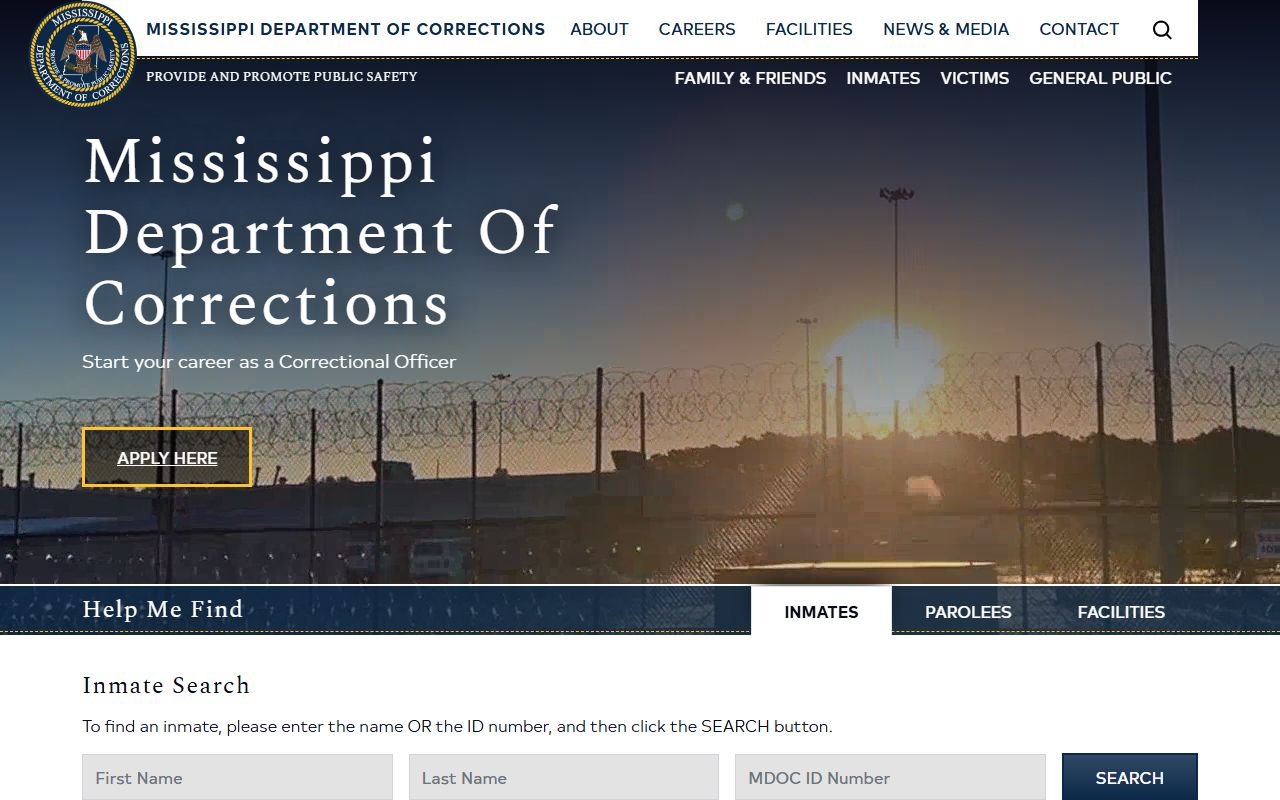
Once a defendant is sentenced to Mississippi Department of Corrections custody, the search moves to the state level. The MDOC inmate locator tracks sentenced state offenders and their facility, status, and identifiers. A reader checking the right tool for someone serving a state sentence can confirm details there.
The MDOC inmate search is the correct tool for state-prison custody. The Mississippi Department of Corrections explains its lookup on its inmate search page.
If a DeSoto County jail search comes up empty for a person you believe is incarcerated, the state locator is the natural next step. Federal detainees and immigration holds are tracked through still other federal systems, not the county or state databases.
Booking and Bond in DeSoto County
A person arrested in DeSoto County may be transported to the Adult Detention Facility for intake. Booking is the formal entry into custody, and it creates the record that appears on the public docket.
Intake can include several steps. Staff confirm identity, inventory personal property, take a booking photo, and collect fingerprints. They enter the charges, run a medical and mental-health screening, classify the detainee for safety, and assign housing. Each step adds data, which is why a brand-new booking may not show full detail right away.
The timing of a first appearance and bond decision depends on the court schedule, the charge type, and whether the arrest was made on a warrant. A detainee may be released several ways: cash bond, surety bond through a bail agent, release on recognizance, a court order, completion of a sentence, transfer to another agency, or dismissal paperwork. A booking charge can differ from the charge a prosecutor later files, so the docket is a snapshot rather than a final legal determination.
DeSoto County Jail Visitation Hours
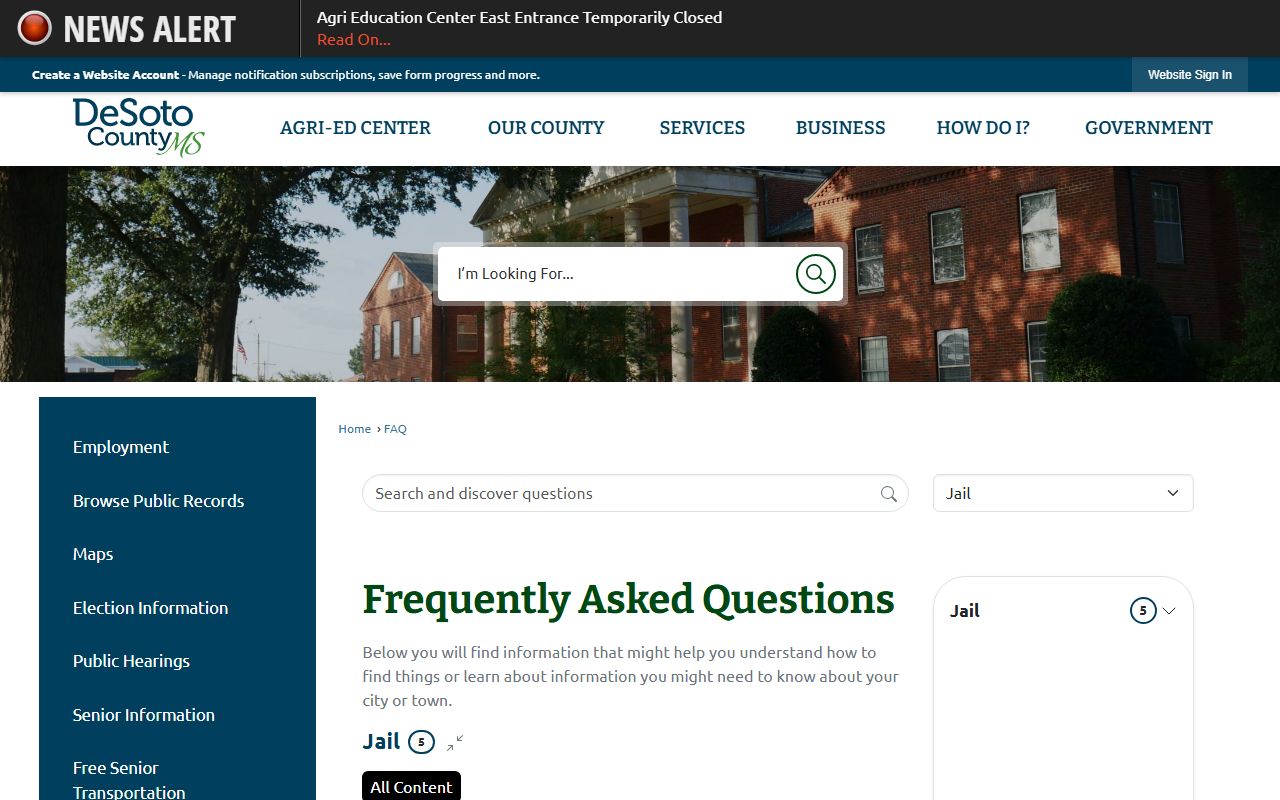
The Adult Detention Facility uses a video visitation system. According to the official jail FAQ, visitors can come to the jail visitation area to make an appointment or schedule a session online through Securus Technologies. The published weekday windows are listed in the schedule below.
The official jail FAQ lists the visitation windows and the Securus reference for visiting from home. You can review the current rules on the county's jail FAQ page before scheduling.
The windows below come from the official jail FAQ. Verify them before arrival, because staffing, lockdowns, medical events, and disciplinary actions can cancel or restrict visits at short notice.
| Day | Visitation Windows | Type |
|---|---|---|
| Monday | 9:00 am-10:30 am, 1:00 pm-3:30 pm, 6:30 pm-9:00 pm | Video |
| Tuesday | 9:00 am-10:30 am, 1:00 pm-3:30 pm, 6:30 pm-9:00 pm | Video |
| Wednesday | 9:00 am-10:30 am, 1:00 pm-3:30 pm, 6:30 pm-9:00 pm | Video |
| Thursday | 9:00 am-10:30 am, 1:00 pm-3:30 pm, 6:30 pm-9:00 pm | Video |
| Friday | 9:00 am-10:30 am, 1:00 pm-3:30 pm, 6:30 pm-9:00 pm | Video |
| Saturday | Confirm with facility | Video |
| Sunday | Confirm with facility | Video |
Visitors should expect to show a government photo ID. Minors generally need adult supervision unless the jail states otherwise. Attorney visits are separate from social visits and are arranged through jail procedures rather than the public schedule.
Mail, Phone, and Commissary
Staying in touch with a detainee runs through channels the jail controls. Detention vendors change over time, so the safe move is to confirm the current provider on the official county page before sending money or mail. The Adult Detention Facility page is the primary source for these instructions.
Mail rules generally require the detainee's full name and booking number, an approved address format, and a return address. Mail must follow contraband rules. Some jails route mail to a processing address and deliver it electronically, so copy the current mailing instructions exactly from the official page rather than guessing the format.
Money, commissary, and phone access usually run through a contracted provider linked by the jail. Deposits may be made online, by kiosk, or by phone. Commissary lets detainees buy approved items, and phone accounts fund outgoing calls that are usually prepaid or collect. The general points below describe how these accounts work.
- Money deposits are handled through the provider the jail links from its official page.
- Commissary ordering and phone accounts are separate from court fines and bond.
- Calls may be recorded, except for privileged legal calls with an attorney.
- Accepted payment methods, limits, and fees apply only as the provider publishes them.
Note: Bond payments follow jail and court bonding procedures, not the commissary system, so handle a release deposit through the proper custody channel.
DeSoto County Warrants and Holds
A roster entry may show a hold or a warrant attached to a detainee. A hold keeps a person in custody for another agency or court even when local charges could otherwise allow release. A warrant is a court order that authorizes an arrest or detention.
The jail docket can reveal people already arrested on warrants, but it is not a full pre-arrest warrant search. Someone with an outstanding warrant who has not been picked up will not appear in custody. To check for active warrants and learn what to do about one, the DeSoto County warrant records cover the search paths and the recall process in detail.
Holds can come from other counties, state agencies, or federal authorities. When a federal hold or detainer applies, the person may be transferred out of county custody. The docket may note the hold agency or warrant number where that data is public, but detainer details are often limited.
Inmate Records Not Shown Online
The public docket is deliberately narrow. Several record types tied to a person in custody never appear in an online roster, by law or by policy. Knowing the gaps prevents wrong assumptions about a blank or thin result.
Withheld items include medical and mental-health records, classification and protective-custody decisions, juvenile detainee data, and victim information. Internal incident reports and disciplinary files are not public either. For court case files behind the charges, the clerk for the filing court is the right custodian, and the full case path appears in the DeSoto County criminal court records.
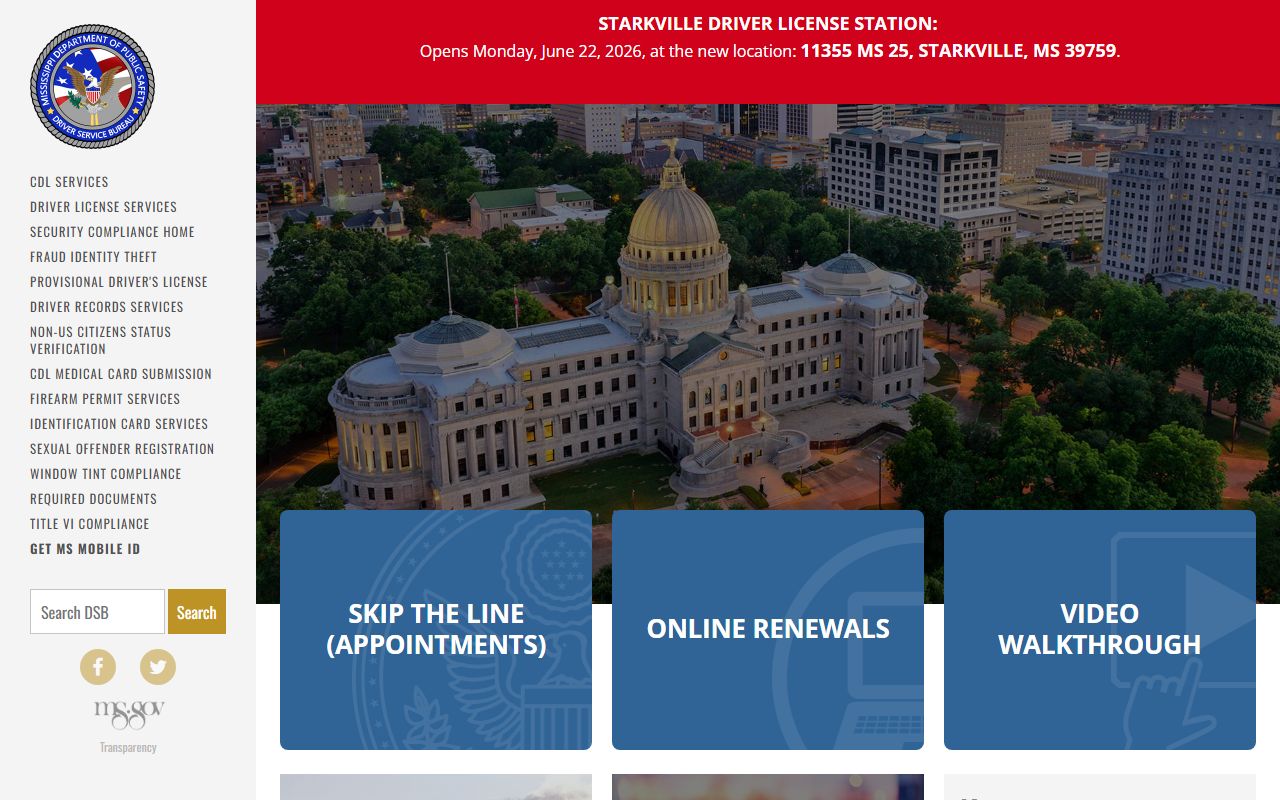
Driver and traffic history sit in a separate state system, not the jail docket. The Mississippi Department of Public Safety handles official driver records through its Driver Service Bureau.
When a record is not online, the fallback is direct contact with the custodian. Sheriff and jail records run through the Sheriff's Department or the Adult Detention Facility. Court files run through the proper clerk. Sentenced state custody runs through MDOC. Each office holds a different slice of the full picture.
VINE Custody Notification
People who want to track a custody change rather than check the docket repeatedly can use a notification service. VINE lets registered users receive alerts about custody status, which helps victims, witnesses, and families stay informed without constant searching.
Mississippi's notification resources are explained through the state corrections agency. The Mississippi Department of Corrections describes the program on its VINE information page.
Notification tools complement the jail docket rather than replace it. The docket answers whether a person is in county custody right now. A notification service tells you when that status changes, so the two work together for anyone following a case from booking through sentencing.